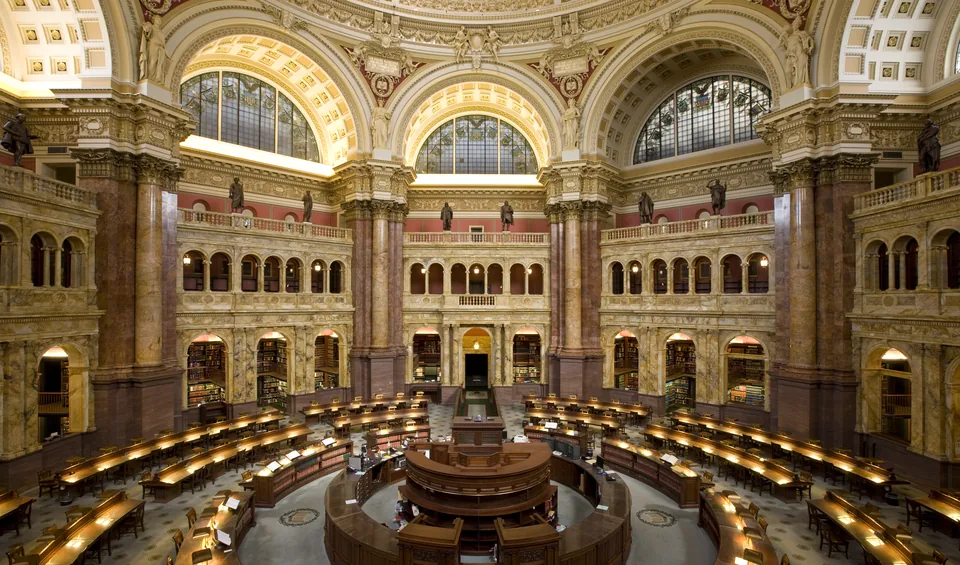
Main Reading Room of the Library of Congress, Washington, D.C., with columns, domed ceiling and rows of reading desks.
The Main Reading Room of the Library of Congress, Thomas Jefferson Building, Washington, D.C. Photograph by Carol M. Highsmith; public domain. Cropped, resized and converted to WebP. Carol M. Highsmith · Public domain · source

The task Fig. 1

Write an AI-search brief someone else could audit — before anyone is paid to look visible.

Most AI-search conversations begin with a promise and end with a screenshot. This publication begins at the other end: a written scope you can hand to a supplier, a colleague or a sceptic, and check line by line.

The brief has seven parts written by you: your business and public site, the audience, exactly one of six fixed intents, the evidence the work must produce, the delivery questions you will not sign without, success criteria written as observable conditions, and your constraints. The builder also records a section for evidence you already hold. Nothing in it is a ranking estimate, a traffic forecast or a share-of-voice figure.

Build the brief in the scope builder

Note The document is assembled in your browser and downloaded by you. No document is sent to this site, and the builder does not query any search engine, third-party tool or Google Search Console.

Six decisions in order, each one written down

The sequence matters. A later decision cannot rescue an earlier one left vague, and a supplier who cannot answer step five should not be quoting for step six.

Name the business and the public site

Write the name you would put on a contract, not a tagline, and the address a reader would actually visit. Anything else makes the rest of the brief unverifiable.

Source 1 Google states there are no additional requirements to appear in AI Overviews or AI Mode, and that no special optimisations are necessary; existing SEO fundamentals remain relevant.

Describe the audience as people

A role, a need or a situation. A list of keywords is not an audience, and it cannot be used later to judge whether a piece of work was any good.

Source 2 Google’s people-first guidance frames quality around originality, demonstrated effort, expertise, trust, clear sourcing and accurate authorship, and warns that fabricated author profiles or credentials are deceptive.

Choose exactly one intent

One of six fixed choices: explain a concept, compare options, support a decision, troubleshoot a problem, establish authority on a subject, or be found for a brand or product. The brief records your choice as written. It does not predict what any system will answer.

Source 3 Google describes its generative AI features as retrieval-augmented generation over its Search index plus “query fan-out”, and says optimising for generative AI search is still SEO; “AEO” and “GEO” are third-party terms.

State what evidence the work must produce

Not what the supplier believes, but what they must hand back so a second person can check it: the tool used, the date, the query, the page, the screenshot. Record what you already hold, too.

Source 4 Google says to be wary of third-party tools that promise ranking success or claim to use “internal” Google metrics; no third-party tool has access to its internal ranking or AI systems.

Write the delivery questions you will not sign without

Who does the work, how crawler access is verified end to end, what is out of scope, and who owns robots.txt, the CDN, the firewall and the publishing calendar.

Source 5 OpenAI publishes separate robots.txt controls per user agent — OAI-SearchBot for ChatGPT search, GPTBot for training, OAI-AdsBot for ads — and advises validating crawler traffic with user-agent identification, verified bot programmes and firewall allowlists rather than short-term IP observations alone.

Set success criteria and constraints

Success as observable, disputable conditions; constraints as ceiling budget, approval rules, regulated claims, languages, technical limits and a list of things the supplier must not do.

Source 6 Google warns that robots.txt primarily manages crawler traffic and is not a reliable way to keep pages out of Google: a disallowed URL can still be indexed if linked elsewhere, and blocking indexing needs noindex or password protection.

Wooden study desks inside the Ewing Branch of the Mercer County Library System, Ewing Township, New Jersey.
Study desks at the Ewing Branch of the Mercer County Library System, Ewing Township, New Jersey, May 2025. Photograph by Famartin; CC BY-SA 4.0. Cropped, resized and converted to WebP. Famartin · CC BY-SA 4.0 · source

Evidence is a document, not a confidence

A supplier who says a page “appears in AI answers” has told you almost nothing you can act on. Ask which question they are answering. Appearance, citation, indexing and traffic are four different observations, produced by different systems, and none of them is a ranking estimate.

Google states that eligibility for its AI features is an eligibility condition only, and explicitly does not guarantee crawling, indexing or serving. Microsoft describes its AI visibility reporting features in Bing Webmaster Tools — Intents, Topics, Citation Share and Compare, then in preview — as observational rather than a ranking system, and says labels may be broad for niche domains. Both are vendor statements about their own products; neither is an independent verification of your outcome.

The practical consequence for a brief: every reported observation should name the tool that produced it and the date. If the report cannot do that, it is an anecdote with a logo on it.

Sources Google Search Central, AI features and your website; Optimizing your website for generative AI features. Microsoft Bing blog, AI visibility reporting (preview). Pages last updated as shown on each source; vendor guidance, not independent testing.

Four separate questions, kept apart

Use this table when reading any supplier report. None of these is the same as a ranking estimate, and this publication takes no position on any individual page’s current status.

What each question asks, and who can actually answer it
QuestionWhat it asksWho holds the observation
AppearanceWhether a passage, link or brand showed up in an AI-generated answer shown to some reader at some moment.The reader’s own session; a supplier can only show a dated, attributed screenshot.
CitationWhether a specific page was used as a supporting source, and whether the reader could follow the link.The engine’s presentation of that answer, at that moment.
IndexingWhether the page was crawled and stored by a search engine at all, with a snippet eligible to be shown.The engine’s own reporting. Google says eligibility does not guarantee crawling or indexing.
TrafficWhether readers arrived at your site and what they did.Your own analytics, on your own site.

Basis Google Search Central, AI features and your website (eligibility is not a guarantee); Microsoft Bing blog, AI visibility reporting in preview (observational, not a ranking system, does not represent traffic share or quality scores). The builder on this site never produces any figure for any of these four questions.

Interior of a modern library with rows of chairs and bookshelves, seen in daylight.
Modern library interior with chairs. Photograph by Shixart1985; CC BY 2.0. Cropped, resized and converted to WebP. Shixart1985 · CC BY 2.0 · source

The guides, and the tool

Four short planning pages, each with the sources behind it, and one private builder.

Position This site publishes no team, client, testimonial, case-result or independent-review claims. Where a scope beyond the brief and the builder would need verifiable operator facts, none are asserted here.